

Can you really teach a cat tricks?
 Cat
Cat Fun
Fun
Cats have a reputation for doing things entirely on their own terms — and there's some truth to that. But it doesn't mean they can't be taught. With the right approach, a little patience, and an understanding of what motivates your individual cat, you might be surprised by what's possible.
Teaching a cat takes more time than it might with a dog, and progress tends to happen at their pace rather than yours. That's not a limitation — it's simply how cats work. The process itself can be a genuinely rewarding way to build trust and deepen the bond between you and your pet.
Getting ready for training — a few things worth knowing
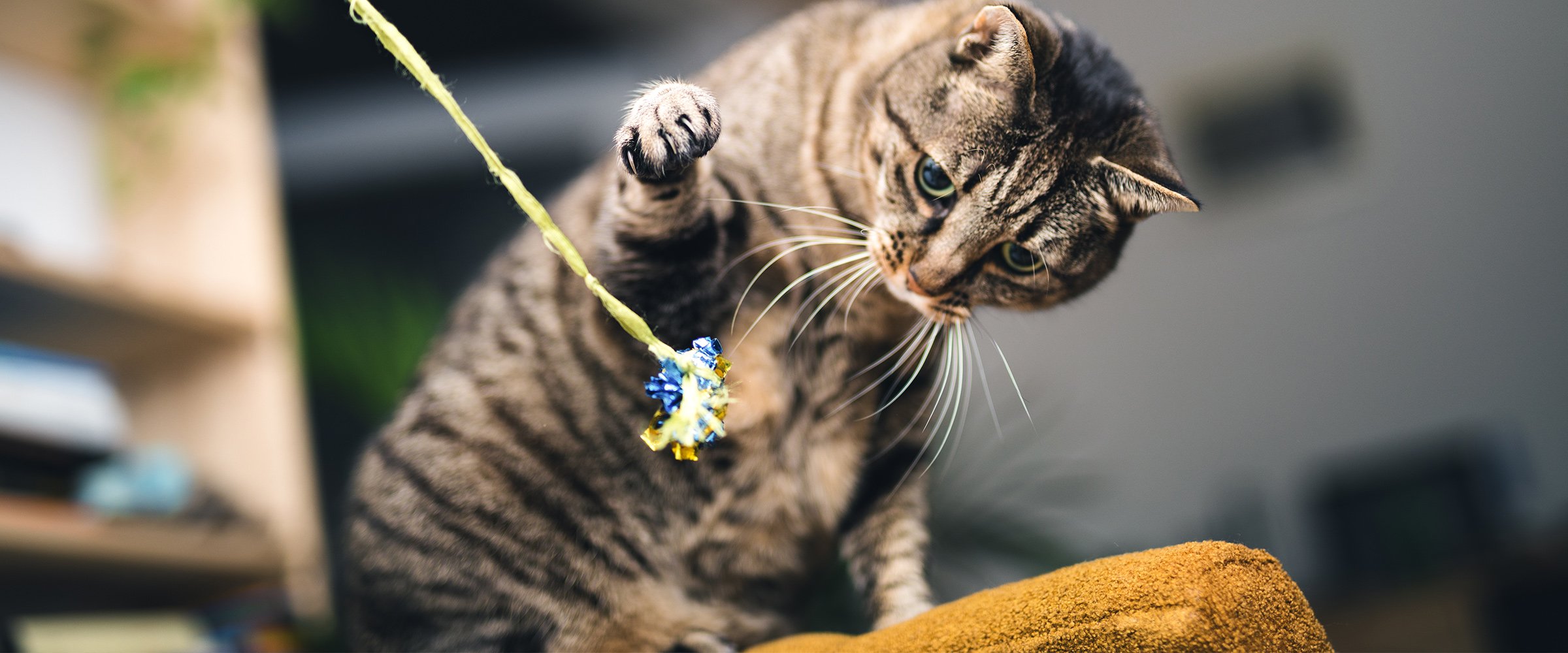
A little preparation goes a long way when it comes to training a cat. Because cats tend to have a shorter attention span than dogs, brief and frequent sessions work far better than longer ones. Ending on a positive moment — before your cat loses interest — helps keep the experience enjoyable for both of you.
Treats are your most important tool. A small, tasty reward given at the right moment communicates clearly that your cat has done something worth repeating. Many owners find a clicker useful alongside treats — the sound marks the exact moment of correct behaviour, making it easier for your cat to understand what they're being rewarded for. The treat should always follow; the clicker is the signal, not the reward itself.
If your cat is on the more timid side, it's worth knowing that the clicker can startle some cats. Holding it in a closed fist softens the sound without affecting how it works.
Each trick is best taught with a consistent, distinct voice command — simple words like "sit", "paw", or "fetch" work well. Consistency matters more than anything else here.
Finally, be patient with the process. Younger cats often pick up new behaviours more quickly, but adult cats are perfectly capable of learning too — it simply requires a little more time and repetition.
Teaching your cat to give a paw
The paw trick is a great place to start — it's one of the more straightforward behaviours to teach, and it has a practical benefit beyond the trick itself. A cat that is comfortable offering their paw on cue tends to be much more relaxed when their paws are handled during nail trimming or a vet visit.
To begin, have your treats ready — and your clicker if you're using one. Give a clear, consistent command such as "paw" or "give paw", then gently lift your cat's paw yourself. Mark the moment with a click, offer a treat, and gently place the paw back down. Calm praise alongside the treat helps reinforce that they've done something right.
Repeat this consistently across short sessions. Over time, your cat will begin to associate the command with the action — and with a little patience, they'll start offering their paw without any help from you.
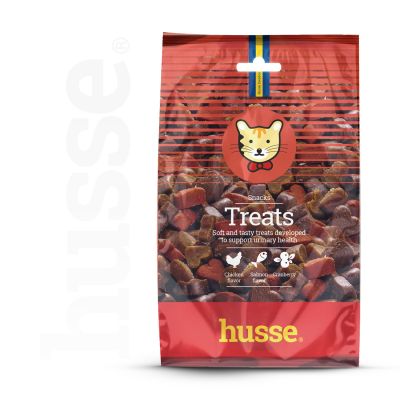
Treats, 150 g | Tasty treats with chicken & cranberry



Pillow Treats Sterilised, 60 g | Functional treats for cats with crunchy shell & soft centre



Pillow Treats Urinary, 60 g | Functional treats for cats with crunchy shell & soft centre


Teaching your cat to sit
Sit is one of the most practical tricks you can teach — and once your cat has it, you'll find it comes in useful in all sorts of everyday situations, particularly if you share your home with multiple pets.
To teach it, hold a treat just above your cat's head and give a clear "sit" command. As your cat follows the treat with their eyes, their head naturally tilts upward — and to stay comfortable, most cats will shift their weight and settle into a sit without much prompting.
The moment they do, mark it with a click, offer the treat, and give them plenty of praise. Consistency across short, repeated sessions is what builds the habit over time.
Once your cat has mastered it, "sit" can be a genuinely useful cue — a calm way to settle things down at feeding time, for example, if you have a household of pets who tend to get a little enthusiastic around mealtimes.
Teaching your cat to fetch
Fetch is a wonderful way to add a little more activity to your cat's day — and while it takes more patience than some tricks, many cats do get there with a consistent approach.
Choose a toy your cat can easily pick up and carry, and start by throwing it a short distance while giving a clear "fetch" command. Chasing is the easy part for most cats — bringing the toy back is where the patience comes in. Keep sessions short, stay encouraging, and celebrate any movement in the right direction.
A note on treats throughout training: rewards are an essential part of the process, but it's worth being mindful of how quickly small treats can add up across a full day of practice. Try to factor treat calories into your cat's overall daily intake, and opt for smaller pieces where possible — the reward is in the moment, not the size of the snack.
If you're working with an older cat, be patient with the pace. Progress may be slower, but the time spent together is valuable in itself.
Other products for fun with cats:
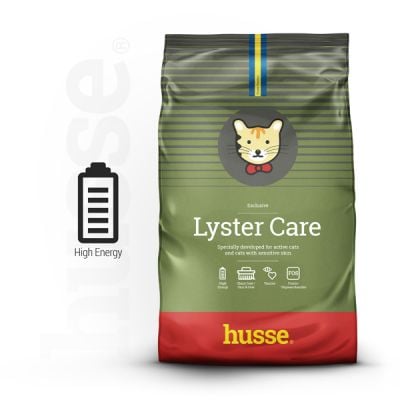
Exclusive Lyster Care, 2 kg | Kibbles for active cats or cats with sensitive skin & coat
€30.00

Exclusive Urinary, 2 kg | Complete cat nutrition that helps maintain urinary health
€20.00
_400x400.jpg "Exclusive Sterilised, 2 kg | Dry food made to satisfy a sterilised cat’s unique nutritional needs")
Exclusive Sterilised, 2 kg | Dry food made to satisfy a sterilised cat’s unique nutritional needs
€20.00
_400x400.jpg "Exclusive Digest, 2 kg | Easy-to-digest formula for cats with sensitive digestive systems")
Exclusive Digest, 2 kg | Easy-to-digest formula for cats with sensitive digestive systems
€15.00
_400x400.jpg "Exclusive Light, 2 kg | Cat dry food designed to help maintain healthy weight")
Exclusive Light, 2 kg | Cat dry food designed to help maintain healthy weight
€15.00